
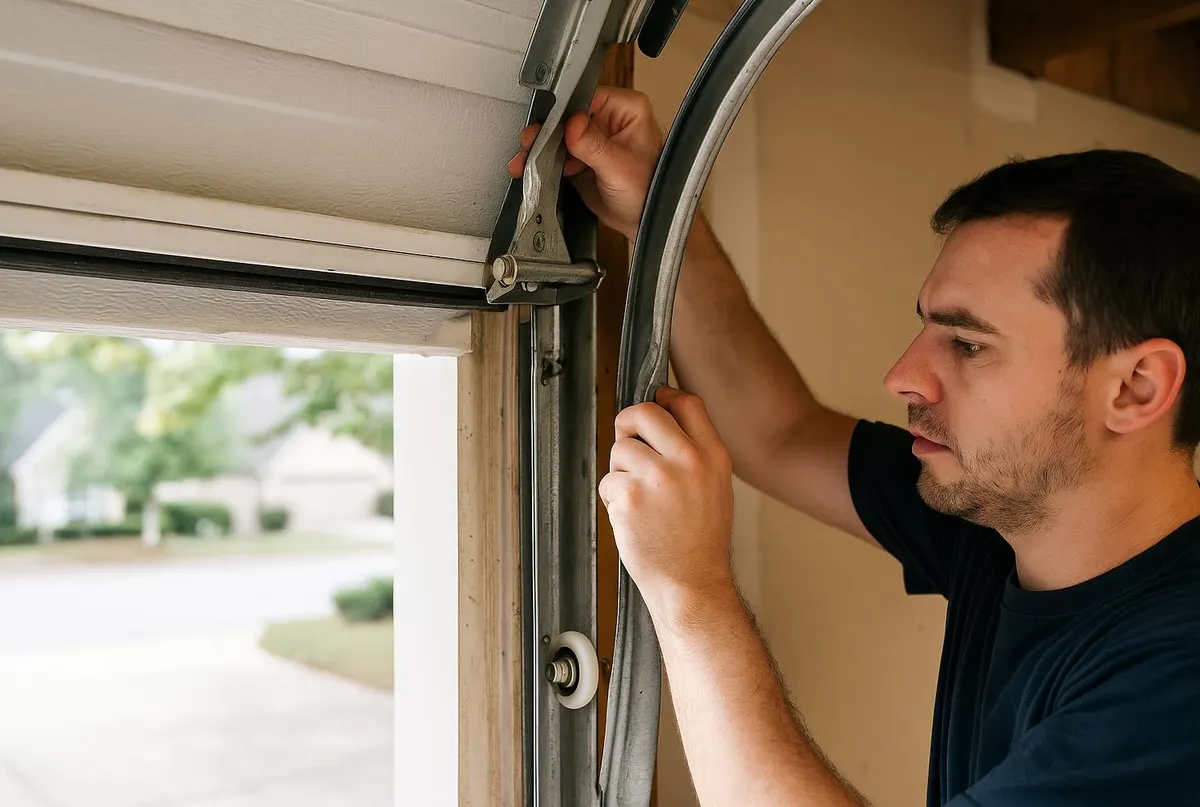
The Mistake Most People Make First
The door won't open, so the instinct is to mash the remote button a few more times, then decide the opener motor is dead and start shopping for a replacement. It's tempting because the opener is the part people can see and understand best—it's the thing with the light and the button, so it feels like the obvious suspect. But a dead-sounding opener is one of the least common actual causes. Jumping straight to "replace the opener" often means spending money on a new unit while the real problem—a tripped breaker, a bumped sensor, or a manual lock someone forgot to release—sits untouched.
What "Won't Open" Actually Looks Like
Not every stuck door fails the same way, and the symptom usually points straight to the cause:
- Complete silence—no hum, no light, nothing happens at all
- The opener hums or clicks but the door doesn't move an inch
- The door starts to rise, then stops or reverses partway
- The remote does nothing but the wall switch works, or the reverse
- The door won't budge even when you try to lift it by hand
- A light on the opener blinks a set number of times when you press the button
The Order a Technician Checks Things
1. Power to the Unit
First check is always the simplest: is the opener plugged in, and has the breaker or a nearby GFCI outlet tripped? Afternoon storms and power flickers during hurricane season trip breakers more often than people expect, and an opener that's lost power won't hum, light up, or respond to anything.
2. The Manual Disconnect
Every opener has a red cord or lever that disconnects the trolley from the motor so the door can be opened by hand during a power outage. If that cord got bumped, or someone used it during a storm and never reset it, the opener will run but the door stays put. Re-engaging it usually means pulling the release back into position and confirming the trolley reconnects with a solid click.
3. Safety Sensors
The two small eyes near the bottom of the tracks have to be aligned and unobstructed, or the opener won't let the door close or, in some models, won't let it move at all. Humidity and condensation on the lenses, a nudge from a bike or lawn equipment, or a sensor wire that's worked loose are the usual culprits. The fix is realignment, a wipe-down, or re-securing the wiring—quick, but easy to miss if you're only looking at the motor.
4. Remote and Wall Control
If one control works and the other doesn't, the problem isn't the door system itself—it's a dead remote battery or a wall switch that's lost programming. This gets isolated before anything else is touched, since it rules out bigger issues fast.
5. The Opener's Drive Mechanism
A motor that hums but produces no movement usually means a stripped gear, a slipped belt, or a chain that's jumped its sprocket. This is mechanical wear, not electrical failure, and it means opening the unit housing to inspect the drive components directly.
6. Springs
With the opener disconnected, a technician will try lifting the door by hand. If it's unusually heavy, drops on its own, or won't hold position, a spring has lost tension or broken. This is also the point where DIY attempts need to stop—torsion springs are under enough load to cause serious injury, and this isn't a fix to attempt solo.
7. Cables and Rollers
A door that hangs crooked, leans to one side, or has visibly slack cable usually has a cable off its drum or frayed through. Combined with rollers that have rusted or swollen from Florida humidity, this can bind the door enough that the opener simply can't force it through the track.
When to Call Apopka Garage Door Service
If you've confirmed the opener has power, the manual release is engaged, and the sensors are clean and aligned, but the door still won't move, the issue is likely mechanical—springs, cables, or an off-track panel. Our Garage Door Spring Repair and Cable & Roller Replacement services cover exactly this kind of failure, and we check the full sequence above on every call so you're not paying to replace parts that were never the problem.
If your garage door in Apopka, FL has stopped opening, give us a call. We'll diagnose it on-site and get it moving again, the right way the first time.